ost business owners and millionaires live very close to where they invest their money. Despite the property business becoming ever more global, it is still most common to find successful property investors investing close to their “home”. This is because they can manage the properties more efficiently, make  sure they do not get “ripped off”, can add value easily and step in quickly if anything negative happens to their properties. They can also spot a good investment and check it out quickly and easily – seizing a good opportunity once identified. They retain far more control and are able to protect their investment – they have the ability to add value to their investment. This lowers the investment risk.
Criteria to maximize returns: That’s not to say you cannot make a good profit from investing in property in another country, continent or the other side of the world, but you may have the following issues to counter:
- Exchange rate fluctuations that may work against you
- Expense of getting people around to solve small problems
- Commissions and fees can be very high (13% of purchase price to buy then sell an off-plan apartment in Spain, rather than ca. 3% in UK for low price flat).
- Less knowledge of interest rate movements, economic conditions and infra-structure investments and timing – not living in the area/country.
- Legal issues over property title – and differences in legal aspects
- Possible issues getting money out of the country
- Complex taxes and fiscal treatment
- Time and cost of traveling to check out your investment
- Less knowledge of the local rental market and less control over tenants – bigger risks of void periods if property not managed will by local agent
- Exposure to being “taken for a ride” by contractors
- Exposure to hidden or unknown taxes
- Complexity with inheritance, wills and capital gain tax liabilities
If you buy close to “home”, you will be far less exposed to all of the above – though as an example, tax in the UK or USA can change without much warning as well – like in overseas countries.
So in summary, if you buy property abroad, you have to convince yourself that the financial rewards out-way the increase in investment risk coming from the above aspects.
The romantic idea – does it make business sense? Many people may have a romantic view of property investment abroad – buying a nice villa in a beautiful location when prices are rising seems idyllic. However, making money in property investment is about as far from an idyllic setting as you can get – it does not matter what setting the property is in – it’s all about whether you can add value to the property when you purchase it, then add more value after the purchase – whilst achieving high rents and yields – to keep your cash-flow positive.
Let the numbers do the talking: Property should be viewed in a dispassionate and objective manner – the numbers should tell the story:
- What is the return on equity after a year – after two?
- What is the rental yield on the investment?
- How quickly can you release equity after adding value, to continue building your portfolio?
- What is the monthly (hopefully) positive cash-flow projected to be
- What are the downside risks – voids, interest rate rises, cost escalations, chance of prices dropping?
- What do you think prices will do in the next few years?
- What major positive change is taking place that will project prices higher?
These criteria have little to do with a nice sunny location, historic buildings or an exotic location. That said, if you firmly believe that a property you identify in a historic, sunny, exotic location will benefit from massive price increases in the short-medium term and yields will be good – then it might be a good idea to buy such a property. But do not expect to be able to easily manage it – and consider the investment time it will take you to service or add value to such a property remotely – can you afford the time? Can you better use this time to purchase property closer to home, at lower risk?
What criteria should I use to choose an area? PropertyInvesting.net suggest using the following criteria to test whether a property is in a good investment area or not:
- Population increase (0-15 year time horizon)
- Land / property shortage
- New infra-structure developments (rail, metro, road, retail, events, business)
- New jobs (preferably services-banking)
- Good communications
- Regenerating area with major new investments
- GDP growth and inflation under control
- Interest rates about to drop
- Attractive-popular area for rentals
- Yields good
- Fiscal - stable tax regime –secure legal title – currency stable
If you can find such an area close to home, then there’s less reason to go further a-field. For example, let’s compare properties in two locations:
1) a cottage in a village in rural central Italy (idyllic setting) £120,000
2) one bedroomed flat in Shoreditch – ½ NE of City of London (dull setting) £160,000.
For the Italian cottage:
The population is declining by 2% a year, there is no land shortage (many families are selling up to pay for retirement with the aging population in the rural areas), no housing shortage, no infra-structure  developments anywhere close. Family run businesses are closing because of competition from Asia, tourism is stable but not increasing, no regeneration in the village, GDP is zero % in this area, interest rates for Eurozone are climbing and expected to for a few more years. It’s very remote so rental demand is low, roads are poor and the nearest airport is 80 miles away, yields are low because of high void periods, and the fiscal regime is uncertain because of political coalitions that change every few years in Italy. Overall – difficult to get to, manage and therefore risks are higher – one would describe it as a poor investment, unless you picked the cottage up at 25% below true market value and sold on quickly (though the market is slow, so this would be unlikely) .
For the London flat:
The population of London is forecast to increase by 10% in the next 10 years – an extra 800,000 people. More single people will need one bedroom flats. Not enough homes are being built – net shortage per year is about 15,000 homes in the London area. Located between the City, Docklands and the new Olympic site, Shoreditch is short of both land and housing. The local population is growing at about 1.5% a year – many wealth bankers are moving in because of travel problems getting to their city jobs – so one bedroom flats are popular for “weekly worker bolt holes”. Kings Cross International and Stratford International will be open end 2008 – with Paris 2½ hours away on the High Speed One train. The area is rapidly 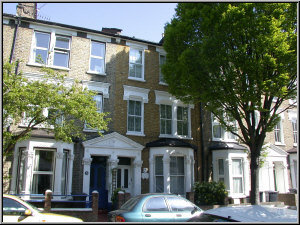 regenerating and the City fringes are expanding towards Shoreditch. New small businesses in services, media and finance are moving in. £5 billion will be spent in the nearby Lower Lees Valley on the Olympic development by 2012. 30,000 new jobs will be created in the next few years. London as a global financial centre has had a good run – and this looks like continuing – more financial services are moving from New York to London (shift in business projected to be 7% in the next 5 years). Rental yields are acceptable, and rental demand is strong – rents are likely to rise as the housing shortage worsens. The fiscal regime is not as stable as one would like, but one can read up about it in advance and see most of it coming – even react against it in some circumstances. Interest rates may be near their peak – and if they drop, asset prices could rise further. It’s one the last places you would expect a house price crash with so much money being made ½ mile away in the City and 1 mile away in the Docklands.
Why go Italian? So why would anyone living near London choose to buy an Italian cottage? Don’t have a good answer this one! (possibly a person close to retirement who is not interested in making money and does not mind get bored in a lonely part of the world – albeit in an idyllic setting). When you  consider that in the time it takes to fly to Italy and back to visit your cottage you could have purchased another good London flat - you should consider this as lost “opportunity value” through not investing locally.
Experts stay focused: If you establish yourself in a certain area – it’s likely you will become somewhat of an expert in the local market – you’ll know the best contacts, establish a network, and have access to be the best deals. You will be able to eek out better value property because of your in depth knowledge of the market. You will not be diluting your knowledge. If you have an early local success – you have a very good opportunity to rapidly duplicate it and improve on it – it’s more difficult to do this rapidly when you purchase overseas. It may not be as exciting or indeed challenging. That said, if it’s simple, you can rapidly duplicate, leverage your skills in a focused manner – you will likely have the best possible chance of rapidly building a high equity property portfolio with lowest risk.
Does it matter to you whether you can tell your friend “I invest in Bulgaria and Cyprus – beautiful and exotic locations” or whether you can tell yourself “I made one million pounds net worth last year”. If the latter is more attractive for you – you’re probably more likely to achieve this by investing in a growing area close to home. Doesn’t sound quite as exciting – but property investing is primarily about making money, not excitement. You’ll find this out by asking experienced property investors and developers how and where they made their money – primarily locally and by duplicating something that worked well for them – and sizing it up. They also had fun – making money.
Objective and practical: We hope you have found this special report helpful – we try and bring you objective, impartial and practical advice and insights. We’re in the business like you are – to make money - as fellow investors - all this advice is aimed at helping improve your investment performance, and help you avoid the pitfalls.


 Posts
Posts



 For all those doubters - the USA will always remain a huge growth engine for the global economy. In 1950 the population of the USA was only 150 million - it's now 300 million - by 2050 it will be 450 million. You do not have such population growth in a country with huge natural and intellectual resources without a big increase in GDP. Remember productivity and GDP growth in the USA has been higher in the last 5 years than almost all developed countries. The huge wealth of the babyboomers will be heading to the coasts of Florida, Carolina and California to retire - so the trick is to find coastal property with sea views that is not susceptible to flooding from sea-level rises, erosion and hurricanes.

 population growth and the European and
 South Africa
 The reason is its minerals mining.
  market has helped fuel steep house price rises towards the end of 2006 in the expectation of continued rises in 2007 when this money is banked – mostly between end January and early April.
  economy and house prices dropped in London – this would imply the North, West and Midlands would be sent into recession with house prices crashing. So what this means is, the Bank of England would need to keep rates at an appropriate level to keep the north growing (not in recession) but cool